
by Kathleen Dean Moore
From southeast Arizona, a parable about the power of fake fear.
Like the coo of the lonesome dove or the low bawling of the calf, brrruuup is a signature sound of the Old West. It’s the noise a pickup makes when it speeds over a cattle grate in a country road. A cattle grate is a set of fourteen steel bars like railroad tracks set across the roadbed over a ditch. The bars are spaced closely enough that a car can rumble across. But if a cow tries to cross, its hoof will slide between the bars, plunging the leg into a space occupied by nothing but tumbleweeds and maybe a crumpled can of Coors. It’s a great invention to solve a big problem, how to create an opening in a barbed wire fence that cars can cross, but cattle cannot. They don’t even try.
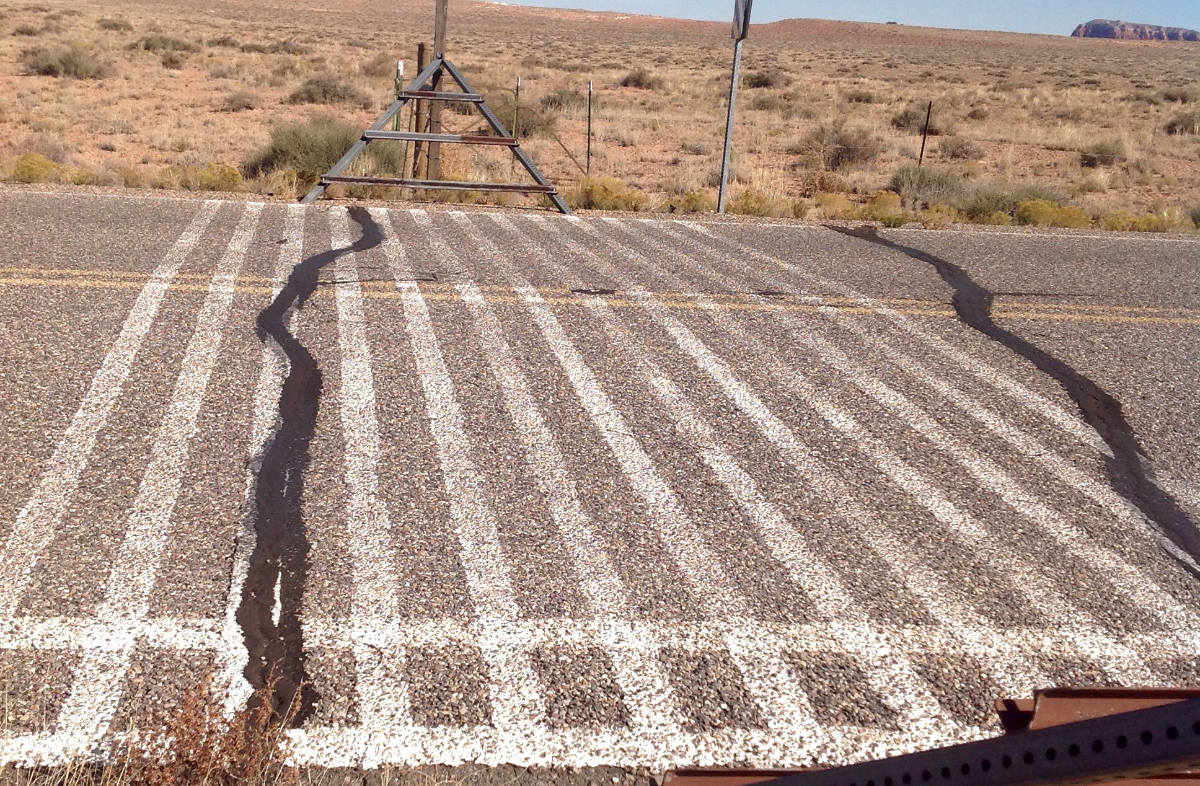
But here’s the thing: Sometimes, highway crews don’t bother actually digging the ditch and installing the bars. Instead, they just paint fourteen stripes across the road or unroll fourteen lengths of shiny tape. It’s not a very convincing imitation of a cattle grate, but it’s good enough to fool the cattle. They herd up on the road, blowing and farting, but would never dream of trotting across the stripes. It’s fake fear that paralyzes them and keeps them fenced in. It’s fake, but ranchers know it works.
And not just ranchers. For millennia, autocrats have controlled people by convincing them to fear something that is not fearsome at all. Take Caligula, third Emperor of Rome, 40 CE. According to reports, Caligula tried to convince his people that the ocean was attacking the shore. Granted, the claim makes a certain sense — those waves bashing against stone, ramming beaches with logs, undermining cliffs. Be afraid, be very afraid, and follow me into battle. Caligula put his soldiers along the shore and ordered them to stab at the ocean with their swords. He himself sailed out to sea a short way, and returned, claiming victory. Ave Imperatur!
But you don’t have to go far back in time to find examples. Who will ever forget poor Secretary of State Colin Powell holding up a bottle of white powder to convince the American public that Iraq had weapons of mass destruction, like anthrax and yellowcake? Be afraid, be very afraid, and follow me into battle. Of course, the white stuff in the bottle was, I don’t know, scary white stuff. Most likely flour, historians say. But Americans supported the war anyway. More than 5,000 Americans died. Mission accomplished!
And now this: “If we didn’t hit within two weeks, Iran would have a nuclear weapon.” Oh no! And Somalis will eat your cat. And trans people will watch you pee in the men’s room. And immigrants will rape your wife. And Venezuelan fishermen will make your son a drug addict. And climate regulation will kill the economy. And measles vaccine will make your kid autistic. Be afraid; be very afraid; stare at the stripes on the road and piss and moan. It’s all fake, but like cattle, some people get comfortable with their fake fears. Spectacular military success!
When I taught the fallacies in my critical thinking class, textbooks called this argumentum in terrorem, an appeal to fear. Here’s the form of the argument: “If you do not support A, then B (a terrible outcome) will happen. Therefore, A is necessary.” I told my students, demand evidence that the statement is true. Had I been teaching cattle, I would have suggested reaching out a tentative hoof and testing to see if the ground would indeed give way under their feet.