
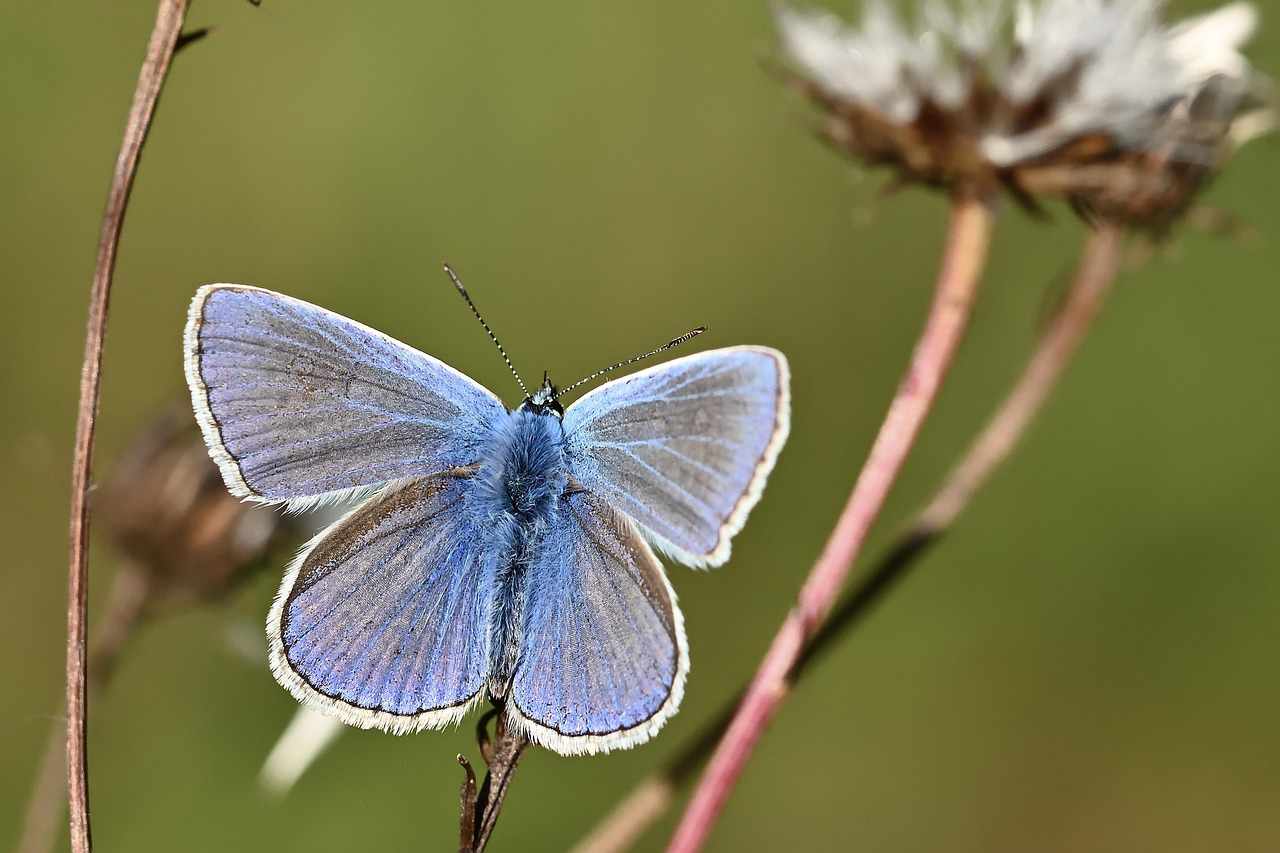
All summer, butterflies dance around purple lupine in our Willamette Valley field. They are tiny, the size of a buttercup, but blue. So blue, they look like slips of summer sky, taken flight. Fender’s blue butterflies. Icaricia icarioides fenderii.
The butterflies were once presumed to be extinct. Then, in 1989, a couple strays showed up in a farmer’s field. They were pronounced officially endangered, on the brink of extinction. But now they are back in force. We see them lapping up nectar from the furry throats of wild iris. We find their eggs on the undersides of Kincaid lupine leaves. On soggy flats by the pond, they gather to lick mud. Two years ago, the Federal Register reclassified the Fender’s blues as merely threatened. That is to say, despite “the loss, degradation, and fragmentation of prairie and oak savannah habitats, including conversion to non-habitat land uses; . . . encroachment into prairie habitats by shrubs and trees due to fire suppression; insecticides and herbicides,” the butterflies have not, and perhaps will not soon, tip over the brink and disappear forever.
Hooray!
Okay. It’s a small victory, but I refuse to be cynical. I’ll take anything I can get these days, and I have nothing but praise for the young biologists in local conservation groups like the Marys River Watershed Council and the Greenbelt Land Trust who, along with acronym-agency biologists, saved the species. With clipboards and unfailing courtesy, people like Kathleen Westly, Restoration Program Director, walked through the one percent of Willamette Valley’s prairies that remain, the small islands in a sea of subdivisions and grass seed farms, and convinced local landowners to keep their prairies intact. They planted the lupines that the butterflies depend on, grubbed out invasive plants that shade out prairies, and even persuaded us to chop down some of the Douglas-firs we had planted in the meadow thirty years ago. We had intended them to be Christmas trees but somehow didn’t get around to cutting them before they grew fifty feet tall and shaded out the field.
It feels good to sit in the sun, lean against a stump, and watch butterflies brought back from the dead. Long tongues that retract and roll up like measuring tapes. Bulgy eyes that see ultraviolet pathways to the heart of a flower. Intestines that collect the remains of the caterpillar that a butterfly used to be. Clear blood. Hairy feet to taste sweetness. Two eyes that coordinate images from 6000 lenses. Transparent wings with scales in some of the loveliest patterns and colors on the planet.
Butterflies evolved in the Cretaceous period, a hundred million years ago. They danced around the feathered crests of dinosaurs, dipped their tongues in the blood of wounded pterosaurs, and drank from newly-evolved flowers. Here’s what I wrote about them in my not-quite-published new book:
“The storms of the Cretaceous period could not kill the butterflies. The asteroid that set the world on fire did not kill the butterflies. They survived ice age after ice age, flood after flood, drifting continents and fire-breathing volcanoes. Even with their axes and plows, the homesteaders did not kill the butterflies. Tiny things, delicate as paper lanterns, each allotted only one year to live before they blink out, the butterflies on this land survived everything that a hundred million years could throw at them. I don’t know where, or when, their journey will end. But it will not be here, and it will not be now.”